Want every seal checked? Veritas inspects each fire door assembly to BS 8214. Fire Door Inspection
What are the two types of fire door seal?
| Intumescent strip | Smoke seal | |
|---|---|---|
| Stops | Fire and hot gases | Cold smoke |
| Works | When heated in a fire | All the time |
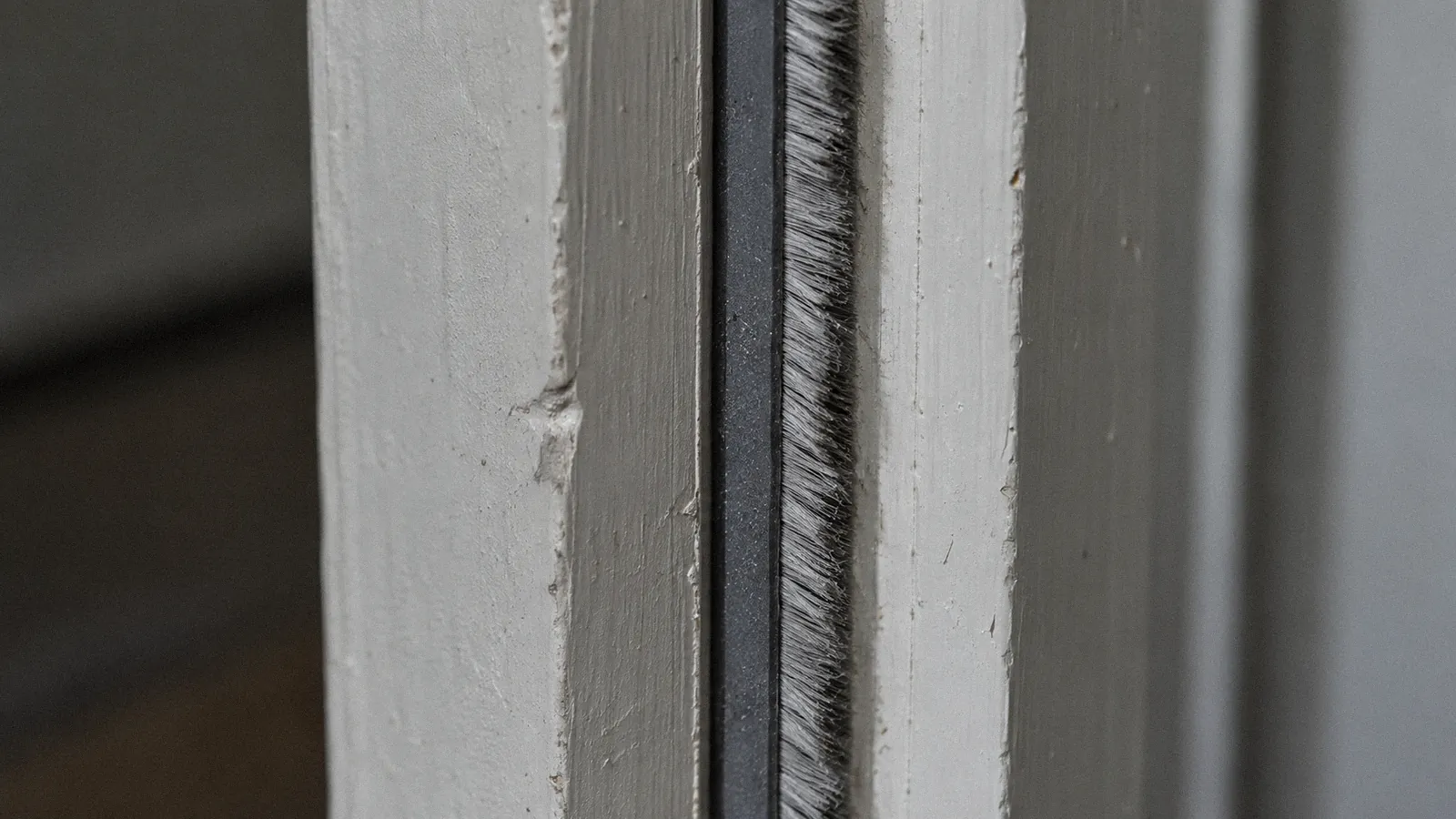
| Looks like | A flat strip set into the frame or leaf edge | A brush or flexible blade, often combined with the strip |
| Needed on | Doors whose test evidence includes them | Doors with an S suffix, such as FD30S |
How does an intumescent strip work?
Intumescent means swelling when heated. In a fire the strip expands many times its size, filling the gap around the leaf so flames cannot pass. Without it, the gap needed for a door to open and close would let fire through long before the door itself burned. The same principle is used in Fire Stopping.
What does a smoke seal do?
Smoke can spread through a building well ahead of the flames. A smoke seal closes the gap at room temperature, so smoke cannot pass a closed door in the early stage of a fire, before the intumescent strip has reacted.
Does every fire door need smoke seals?
Only doors specified as smoke-control doors, shown by the S suffix in the rating. The rating a door needs is set by the building's fire strategy; see Fire Door Ratings: FD30 and FD60.
What should be checked on fire door seals?
- Seals are present along the head and both sides, without gaps or missing sections
- They are not painted over, which can stop them working
- Brushes and blades are not flattened, torn or missing
- The size and position match the door's tested specification
The rest of the checks are in the Fire Door Inspection Checklist.
Can fire door seals be replaced?
Yes, but only with seals that match the door's tested specification for size, type and position. Fitting a different seal can mean the door no longer matches its fire test evidence.