What does a fire compartmentation survey check?
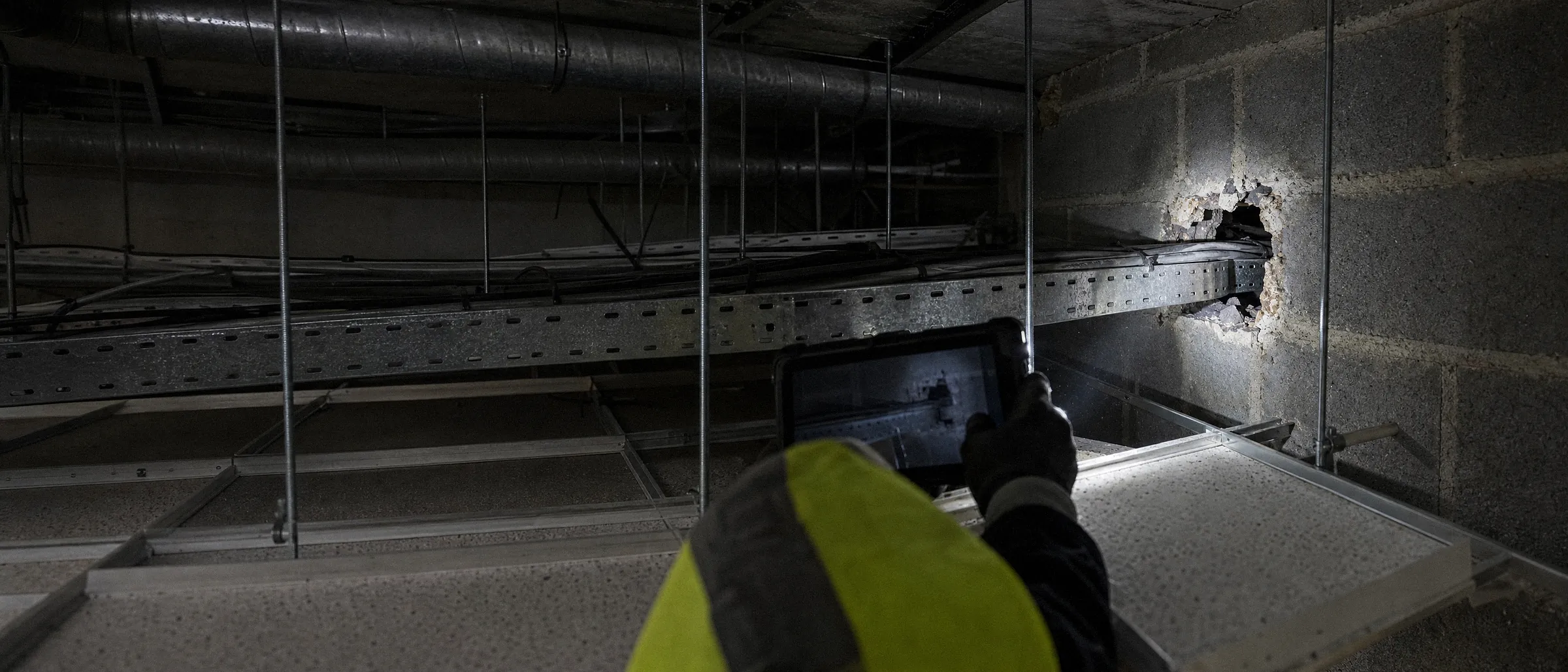
A compartmentation survey checks the elements that keep fire and smoke inside the compartment where it starts. The surveyor works above ceilings, inside risers and behind access panels, because that is where breaches are hidden.
| Element | What is checked |
|---|---|
| Compartment walls | Continuous from floor slab to soffit, with no gaps above the ceiling line and no unsealed openings. |
| Compartment floors | Every service penetration through the slab sealed with a tested fire stopping product. |
| Fire stopping | Correct product for the service type, installed to the manufacturer detail, to the depth and width the fire test evidence requires. |
| Cavity barriers | Present where cavities cross compartment lines, continuous, and tight to the surfaces they close off. |
| Risers and ducts | Sealed at each floor or enclosed in fire-resisting construction. |
| Fire doors in compartment walls | Flagged for a full fire door inspection where the door assembly itself needs assessing. |
The background to each element is in Fire Compartmentation.
Is a fire stopping survey the same as a compartmentation survey?
Yes. Fire stopping is the seal around a service where it passes through a compartment wall or floor, so it is part of the compartment and is surveyed with it. A fire stopping survey and a compartmentation survey describe the same inspection. What fire stopping is made of, and where it is required, is covered in Fire Stopping.
How is fire stopping tested?
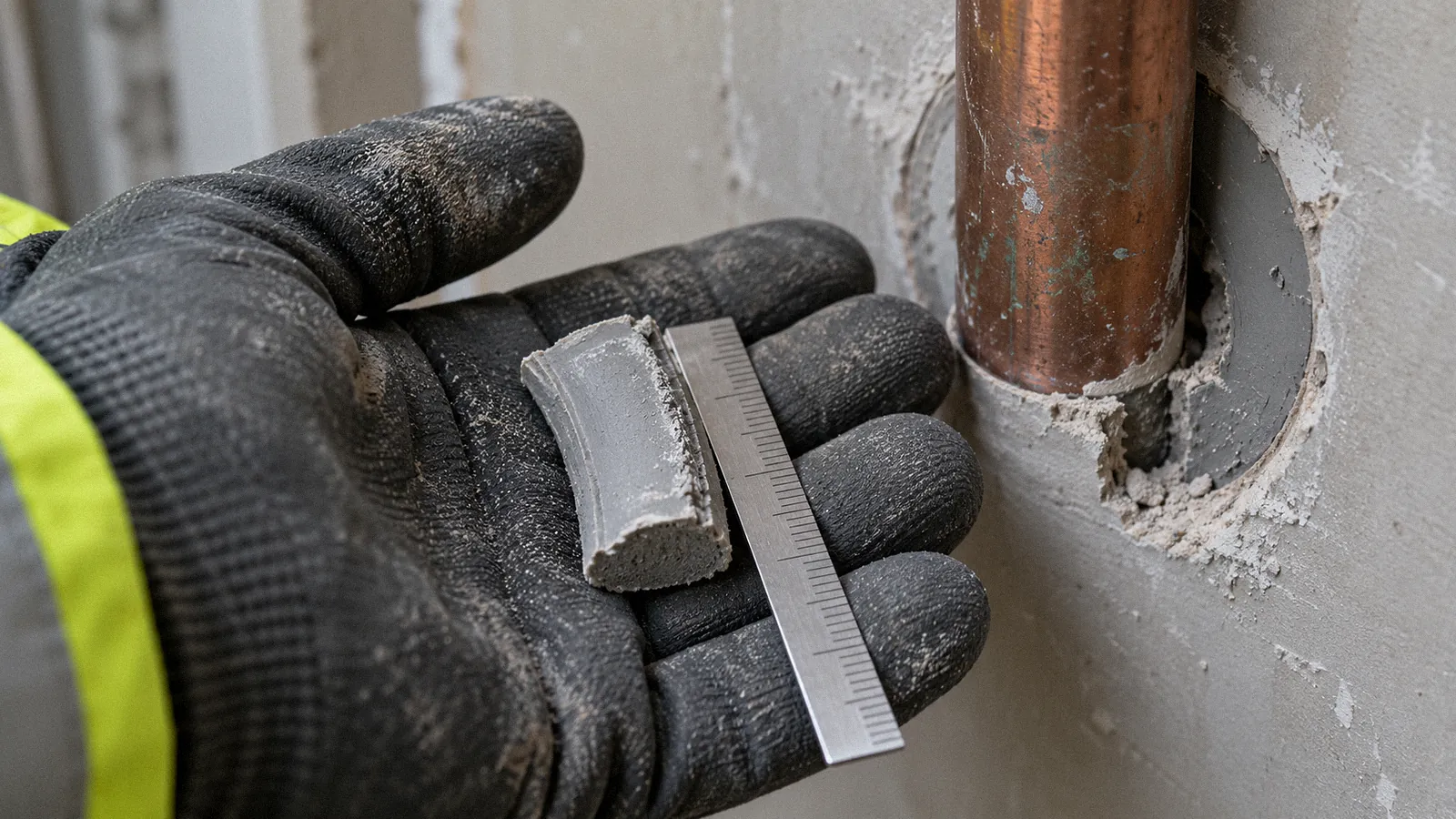
Fire stopping is tested visually and, where the visual check cannot confirm it, destructively.
- Visual inspection. Each penetration is located and compared with the manufacturer installation detail for that product and service type. Defects are photographed.
- Destructive testing. A small section of sealant or batt is cut out to confirm the product, its depth and what is behind it.
- Evidence check. The installed seal is matched to its fire test evidence, or to a solution Approved Document B accepts. A seal with no evidence of performance for that service and substrate cannot be confirmed as compliant, and is recorded as such even if it looks complete.
Can fire stopping be inspected during construction?
Yes. Veritas inspects ongoing works as well as completed buildings, checking installed fire stopping against the manufacturer installation details and fire test evidence before ceilings and boards close it in.
When do you need a compartmentation survey?
- The fire risk assessment recommends one, usually because the assessor could not confirm compartmentation from a non-destructive survey.
- A Type 2 or Type 4 assessment is needed. See Fire Risk Assessment Types 1 to 4.
- Compartmentation is in doubt in a block that relies on a Stay Put Policy, which only works while compartmentation holds.
- Services have been added or rerouted, leaving new holes in compartment walls and floors.
- A building is changing hands and the buyer or lender needs evidence of its passive fire protection.
Cavities that cross compartment lines need cavity barriers; the survey checks they are present and continuous.
What is in the survey report?
Every defect is located, photographed and given a remedial action. Data is collected electronically on site. Budgeted cost plans for the remedial works are available on request.
- Location
- Level 2, plant room, north wall
- Element
- Compartment wall: cable tray penetration
- Finding
- Opening around cable tray filled with expanding foam with no fire test evidence
- Standard
- Manufacturer installation detail and fire test evidence
- Action
- Remove foam, install a tested batt and sealant system, re-inspect
- Status
- Action required
Asset registers and location plans
Veritas also produces registers and location plans for fire stopping, fire doors, structural fire protection and cavity barriers, so each element can be found, maintained and re-inspected.
How much does a compartmentation survey cost?
The price depends on the floor area, the number of risers and ceiling voids to open, how much destructive testing is needed and whether the building is occupied. [typical price range or day rate: to confirm] Send the address and the areas to survey for a quote.
Background reading
- Fire Compartmentation: what it is and the regulations it meets.
- Fire Stopping: products, where it is needed and certification.
- Cavity Barriers: where they are required and how they fail.
- Fire Risk Assessment Types 1 to 4: which type includes destructive inspection.