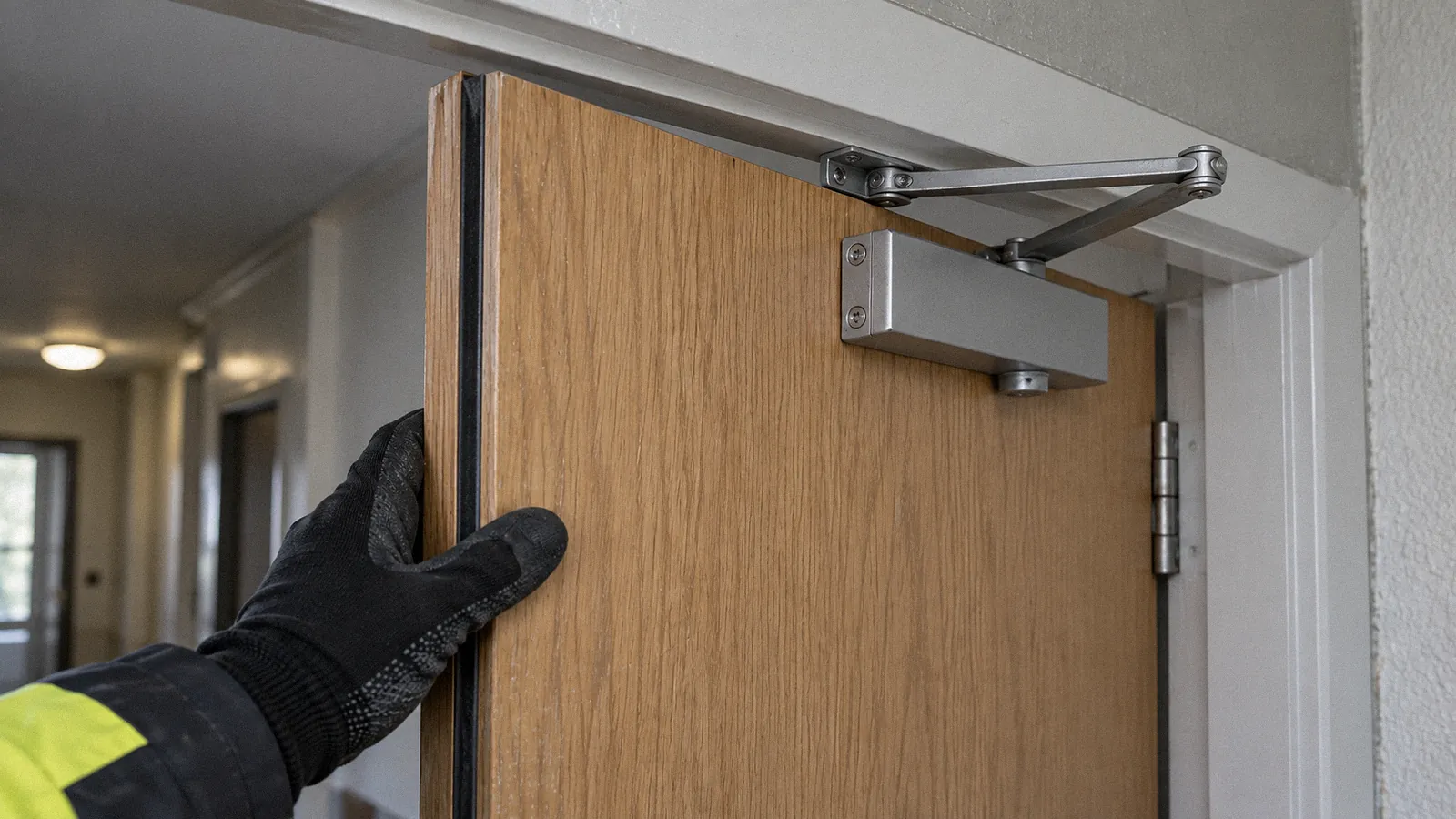
A fire door inspection checks 14 things: the certification label, leaf, frame, gaps, threshold, intumescent and smoke seals, hinges, self-closer, latch, glazing, air transfer grilles, signage and whether the door is held open. A door fails if any check that applies to it fails.
Updated 1 October 2026Written by Veritas Inspections, passive fire protection inspectors
Prefer an inspector to do it? Veritas carries out UKAS-accredited fire door inspections. Fire Door Inspection →
Fire door inspection checklist
Tick each check as you go. The counter shows how many of the 14 checks this door has passed.
One door, 14 checks
How do you use a fire door checklist?
Work through one door at a time with it closed, then open. Measure gaps with a feeler gauge rather than by eye, and test the closer from fully open and from a few degrees open. Record the door's location and photograph anything that fails so the repair can be checked later. The intervals the law sets for these checks are in Fire Door Regulations.
What happens if a door fails a check?
Report it and get it repaired with components that match the door's certification. A replacement seal, hinge or closer has to be compatible with the tested door; an untested part can invalidate the rating. Seals are covered in Fire Door Seals, and ratings in Fire Door Ratings: FD30 and FD60.
Is a checklist enough, or do I need a full inspection?
A checklist suits routine checks by building staff. A full inspection goes further: it confirms each door against its certification, the manufacturer data and BS 8214, records every door in a schedule with photographs, and gives the remedial action for each defect.
Hand the checklist to us
Send the building address and roughly how many fire doors it has.