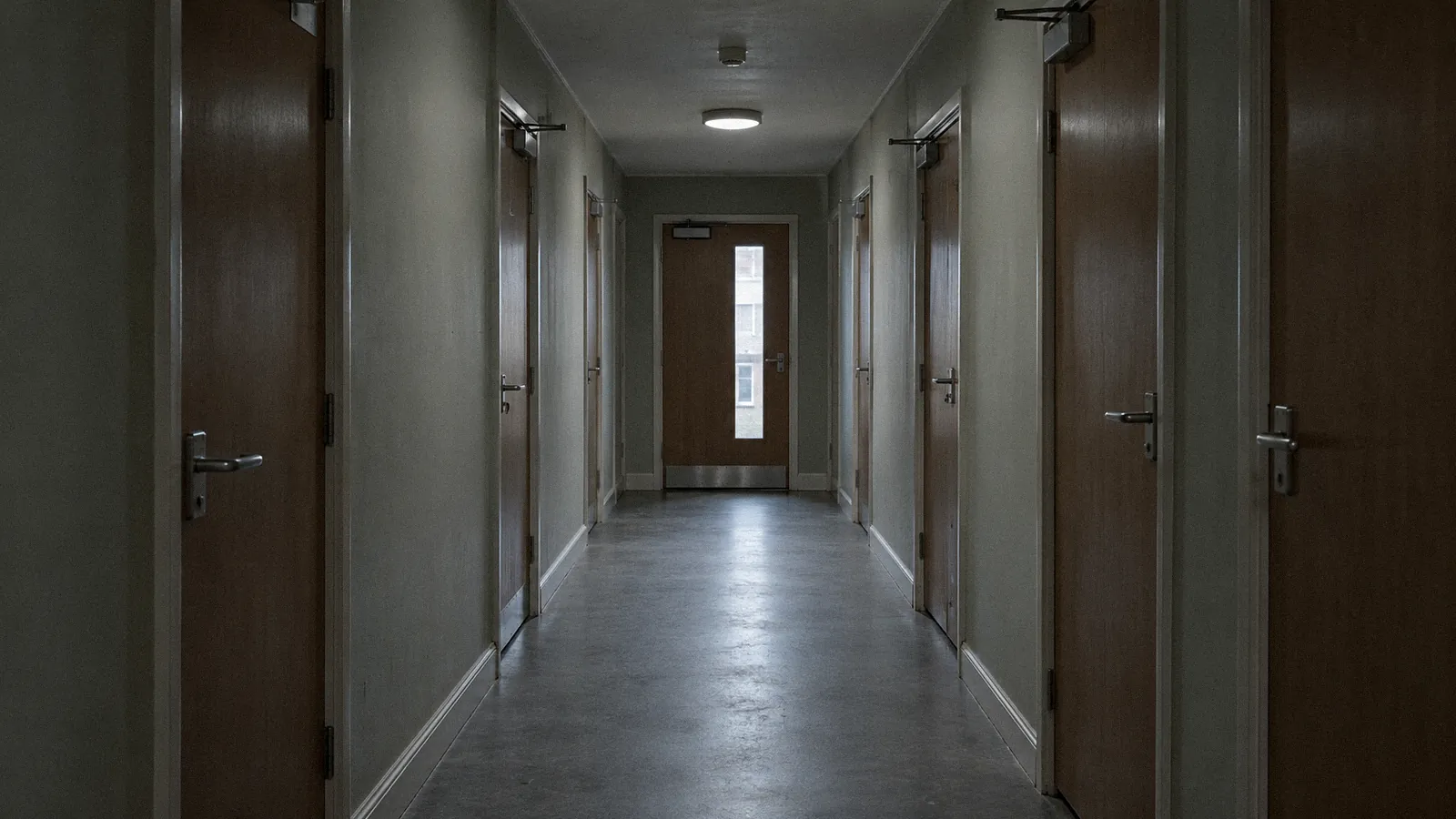
A stay put policy is only as good as the compartmentation behind it. Veritas surveys it. Fire Compartmentation Survey
What is a stay put policy?
It is the evacuation strategy for most purpose-built blocks of flats. Residents in the flat where the fire starts leave and call the fire and rescue service. Everyone else stays in their flat, which should be safe, unless they are affected by heat or smoke or told to leave. It avoids crowding stairs that firefighters need.
Why does stay put depend on compartmentation?
Each flat is designed as a separate fire compartment. If the walls, floors, fire stopping and flat entrance doors hold, a fire stays in the flat where it started long enough for firefighters to deal with it. If compartmentation has been breached, smoke and fire can reach other flats and the escape routes, and staying put is no longer safe. See Fire Compartmentation.
When does a building change to simultaneous evacuation?
When the fire risk assessment finds compartmentation or the external walls cannot be relied on, the Responsible Person may need to change to simultaneous evacuation, where everyone leaves at once. This is often a temporary measure while remedial works are carried out, and needs a way to warn every resident, such as a common fire alarm.
How do you check a stay put policy is still safe?
- Confirm compartmentation between flats and the common parts with a fire compartmentation survey
- Check flat entrance doors close, latch and are sealed; see Fire Door Regulations
- Review the strategy in the fire risk assessment after any works that pass through walls or floors