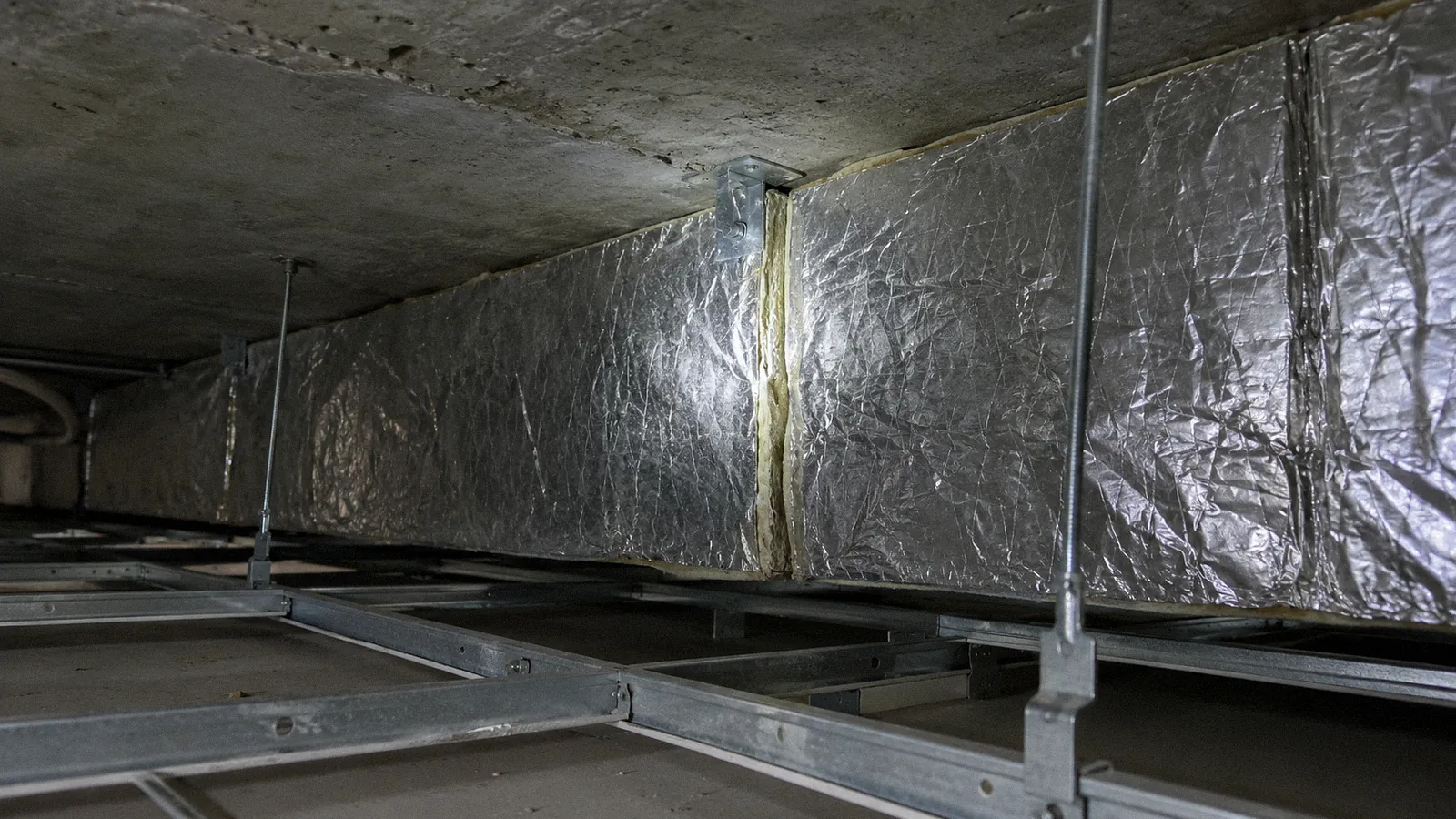
Need to know if your cavity barriers are there? Veritas checks them during compartmentation surveys. Fire Compartmentation Survey
What is a cavity barrier?
Cavities are hidden spaces inside the construction: above suspended ceilings, under raised floors, inside stud walls and behind external cladding. Fire can travel through them out of sight and past the compartment walls below. A cavity barrier closes the cavity to stop that happening. It is one part of Fire Compartmentation.
Where are cavity barriers required?
- Where a cavity meets a compartment wall or floor, so the compartment continues through the void
- At the edges of cavities, including around openings such as windows and doors
- To subdivide very large cavities into smaller sections
- In external wall cavities at each compartment floor and wall line
Approved Document B sets out where they are needed and the maximum spacing for each building type.
What fire performance must a cavity barrier achieve?
At least 30 minutes integrity and 15 minutes insulation, unless the guidance for that location asks for more. It must also be fixed so it stays in place if the construction around it moves or collapses in a fire.
What types of cavity barrier are there?
| Type | Where it is used |
|---|---|
| Closed-state (mineral wool, board) | Ceiling and floor voids, internal walls |
| Open-state (intumescent) | Ventilated cladding cavities that must stay open for drainage and airflow; the intumescent strip closes the gap in a fire |
How do cavity barriers fail?
- Missing altogether, or never installed
- Gaps at joints and edges, or barriers not tight to the surfaces they close
- Services pushed through them without fire stopping
- Open-state barriers fitted upside down or with too large an air gap
How are cavity barriers inspected?
By opening the cavity: lifting ceiling tiles, removing access panels or, in external walls, using openings or a borescope. Veritas checks cavity barriers in a fire compartmentation survey and can record them in an asset register.