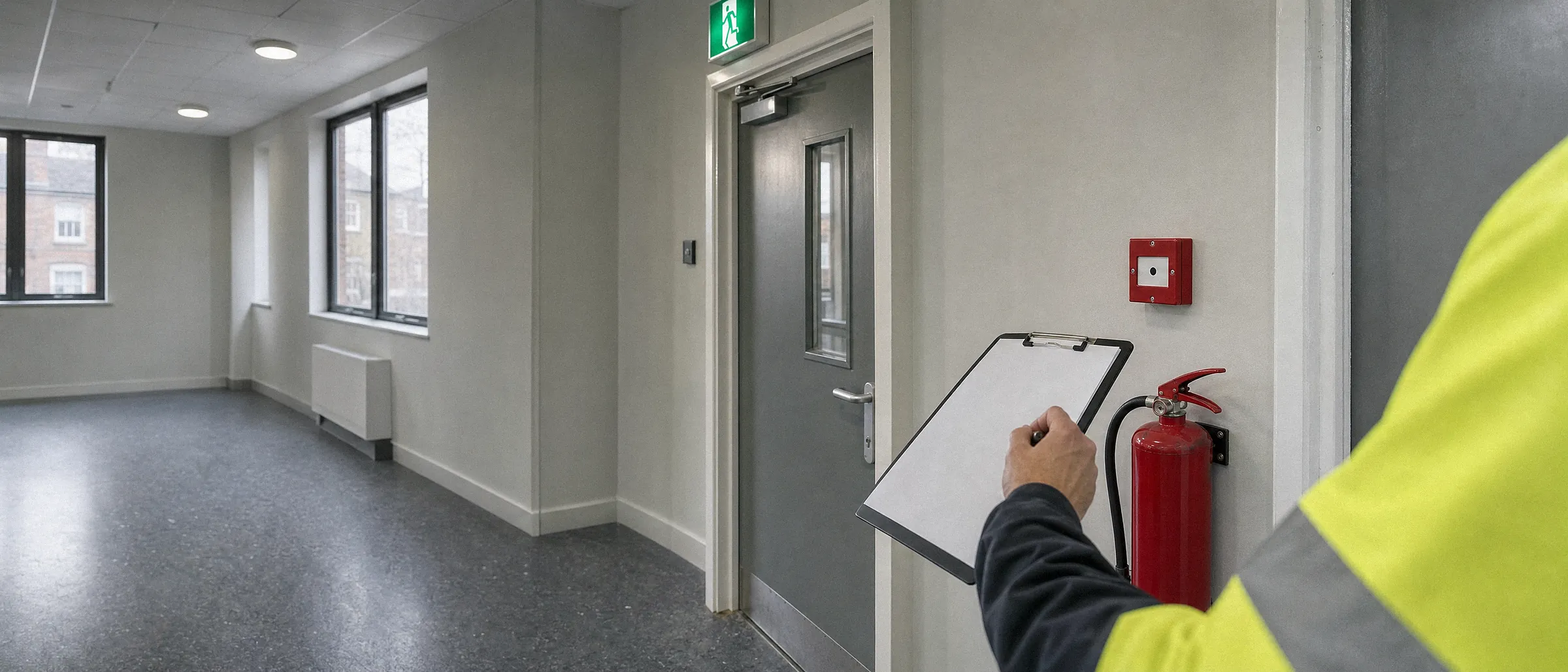
What does a fire risk assessment cover?
The assessment is a non-destructive survey in three parts. In residential buildings it covers the common areas; in workplaces, the premises as a whole.
| Part | What is assessed |
|---|---|
| Fire hazards | Sources of ignition and fuel: electrical installations, smoking, arson risk, heating, storage. |
| Fire protection | Escape routes, measures that limit fire spread, emergency lighting, signage, fire alarm and detection, extinguishers. |
| Fire safety management | Procedures, staff training, maintenance and testing records. |
Where the assessor cannot confirm, without opening up, that compartment walls, floors and fire stopping are intact, the action plan recommends a fire compartmentation survey. Doors that need a door-by-door assessment are referred for a fire door inspection.
Who needs a fire risk assessment?
The Responsible Person: the employer, or the owner or other person in control of the premises. A managing agent acting for them takes on duties for the matters it controls. The duty comes from Article 9 of the Regulatory Reform (Fire Safety) Order 2005. When more than one person shares control, each is responsible for the parts they control and they must co-operate. Who counts as the Responsible Person in each type of building is set out in Who Is Responsible for a Fire Risk Assessment?
Since 1 October 2023 every Responsible Person must record the full fire risk assessment in writing, including the name of the person who carried it out.
Fire risk assessments for workplaces and offices
Offices, shops, warehouses, healthcare and education buildings are all covered by the Fire Safety Order. The assessment checks that people can escape safely, that fire cannot spread through hidden routes, and that staff know the procedures. The method is the same for every non-domestic building; what changes is the hazards and the number of people at risk.
Fire risk assessments for blocks of flats and HMOs
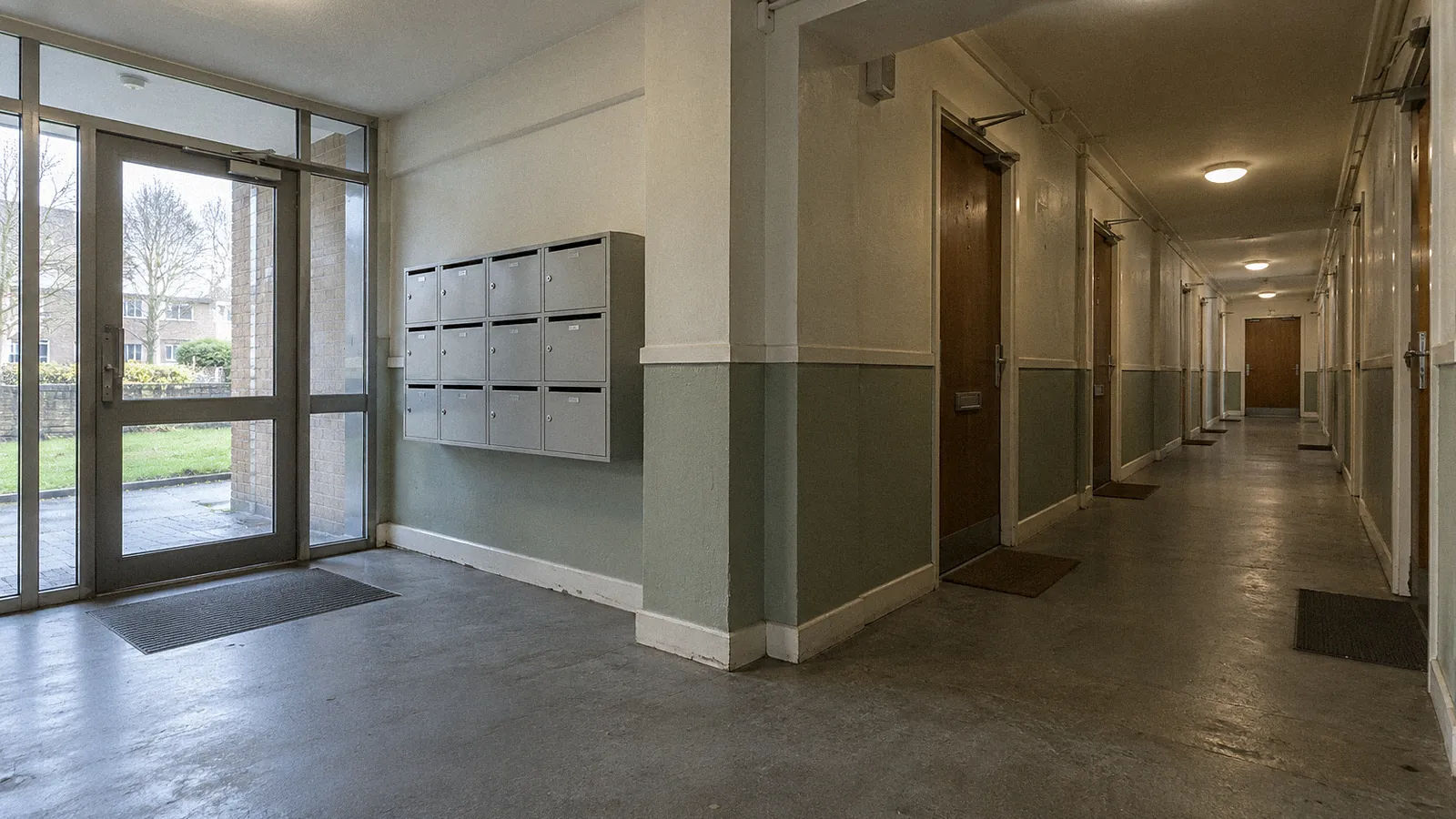
In residential buildings the assessment covers the common parts: entrance halls, corridors, stairs and plant areas, plus the flat entrance doors that open onto them. Buildings with two or more flats also fall under the Fire Safety Act 2021 and the Fire Safety (England) Regulations 2022.
[residential and HMO work confirmed: to confirm]
What are the four types of fire risk assessment?
Type 1 covers the common parts without opening anything up. Type 2 adds destructive inspection of the common parts. Types 3 and 4 extend into the flats, non-destructively and destructively. The LGA guide says a Type 1 is normally sufficient for most purpose-built blocks. Each type is compared in Fire Risk Assessment Types 1 to 4.
How often should a fire risk assessment be done?
There is no fixed interval in law; it must be reviewed regularly and whenever it may no longer be valid. The triggers are listed under Who Is Responsible for a Fire Risk Assessment?
What do you receive?
- A written record of the findings and the actions needed, naming the assessor
- [action plan priorities and photographs: to confirm]
- Referrals for a compartmentation survey or fire door inspection where the evidence needs it
How much does a fire risk assessment cost?
The price depends on the floor area, the number of floors, the building's use and the type of assessment. [price ranges: to confirm]